
7 Proven Strategies for Managing Classroom Behaviour
Managing classroom behaviour is one of the most significant challenges teachers face. Whether you’re a seasoned educator or new to the profession, the task of maintaining a productive and respectful classroom can be daunting. But fear not! You’re not alone in this struggle. In the following blog, we will share seven proven strategies for managing classroom behaviour, drawing from our own experiences as both teachers and education recruitment specialists. These strategies have helped countless teachers create a positive learning environment where both students and teachers can thrive.
Strategy 1: Establish Clear Rules and Expectations
Laying the Foundation for Respectful Interactions
The first step in managing classroom behaviour is establishing clear rules and expectations. Think of this as laying the foundation of your classroom. Just like a house built on a strong foundation stands tall, a classroom with clearly defined rules can operate smoothly and effectively.
We asked our team for a personal anecdote – “I remember during my first year of teaching, I made the mistake of assuming my students would “just know” how to behave. Big mistake! It wasn’t until I spent time explicitly setting and practicing classroom rules that I saw a significant improvement in behaviour.”
Implementation Tips
- Start Early: Establish rules from day one. Make them visible in the classroom.
- Be Specific: Instead of saying “Respect each other,” say “Listen when someone is speaking.”
- Involve Students: Let students help create the rules. This fosters a sense of ownership and responsibility.
Strategy 2: Build Strong Relationships with Students
Creating a Trusting Classroom Culture
Building strong relationships with your students is crucial for managing behaviour. When students feel respected and valued, they’re more likely to respect you and the classroom rules.
Implementation Tips
- Show Interest: Take time to learn about your students’ interests, families, and backgrounds.
- Be Available: Make yourself available for one-on-one conversations.
- Create Bonding Activities: Incorporate team-building activities that foster a sense of community.

Strategy 3: Use Positive Reinforcement
Encouraging Good Behaviour Through Rewards
Positive reinforcement is one of the most effective ways to encourage good behaviour. By recognising and rewarding positive actions, you create an environment where good behaviour is noticed and valued.
Here’s another personal anecdote from one of our team –
“In one of my classes, I introduced a “Star Student” board. Each week, students would nominate classmates who demonstrated positive behaviour. The excitement and pride this simple acknowledgment brought to students were incredible!”
Implementation Tips
- Verbal Praise: A simple “Great job!” can go a long way.
- Tangible Rewards: Stickers, certificates, or extra recess time can be powerful motivators.
- Recognition Systems: Implement systems like “Student of the Week” to celebrate consistent effort.
Strategy 4: Employ Engaging Teaching Methods
Keeping Students Focused and Interested
Let’s face it—an engaged classroom is a well-behaved classroom. When students are interested in what they’re learning, they’re less likely to act out.
Let’s bring it to life with a personal anecdote –
“I once turned a dreary history lesson into an interactive role-playing game with costumes and scripts. Not only did student participation skyrocket, but behavioural issues nearly vanished during that unit.”
Implementation Tips
- Interactive Lessons: Use hands-on activities, group work, and discussions.
- Technology Integration: Incorporate educational technology like tablets, apps, and online resources.
- Varied Teaching Styles: Mix up your teaching style to cater to different learning preferences—visual, auditory, and kinesthetics.
Strategy 5: Develop Consistent Consequences
Ensuring Fairness and Accountability
Consistency is key when it comes to consequences for misbehaviour. Students need to know that rules are enforced fairly and predictably.
Implementation Tips
- Clear Consequences: Make sure students understand the consequences of breaking rules.
- Consistency: Apply consequences consistently, regardless of the student or situation.
- Fairness: Ensure that consequences are fair and appropriate to the misbehaviour.
Strategy 6: Monitor and Adjust Classroom Environment
Creating a Space Conducive to Learning
The physical and emotional environment of your classroom plays a huge role in student behaviour. An organised and positive environment can make a world of difference.
Here’s another personal anecdote from our team –
“I once had a class where the seating arrangement seemed to be a constant source of distraction. By simply rearranging the seating plan and introducing some calming decor, the classroom environment became much more conducive to learning.”
Implementation Tips
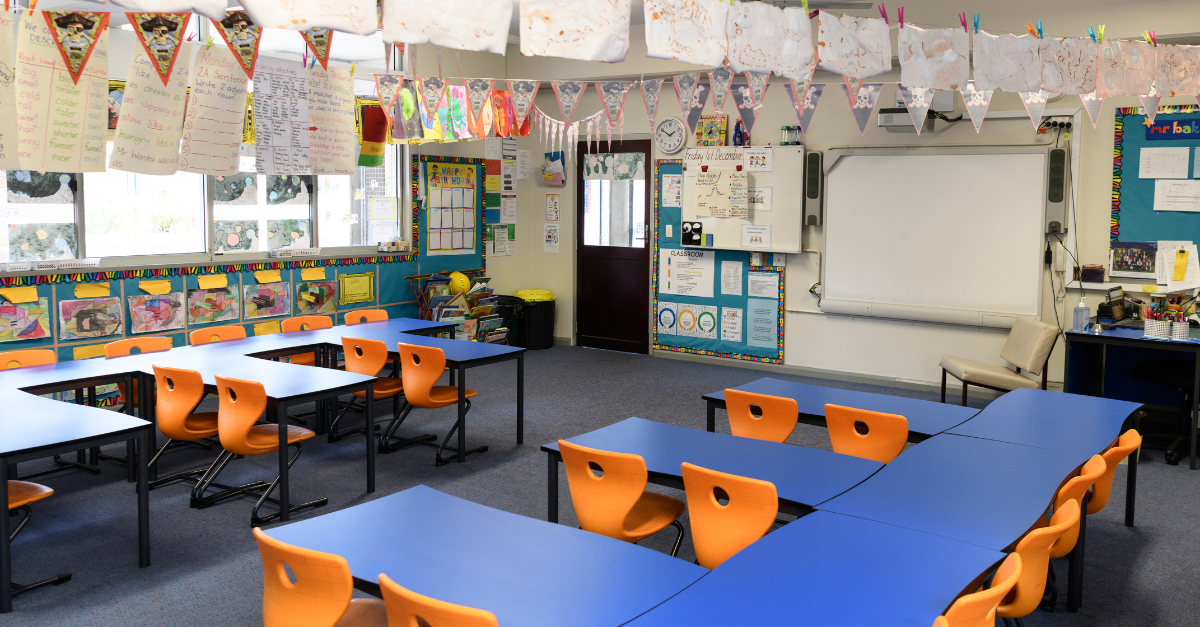
- Seating Arrangements: Experiment with different seating plans to minimise distractions and promote focus.
- Classroom Decor: Use colours and decorations that create a calm and inviting atmosphere.
- Noise Management: Implement strategies to keep noise levels appropriate, such as setting a noise metre or using quiet signals.
Strategy 7: Seek Support and Collaboration
Leveraging the Power of Teamwork
You don’t have to manage classroom behaviour alone. Seeking support and collaborating with colleagues, administrators, and parents can provide invaluable assistance and insights.
Here’s what one of our team had to say –
“One year, I had a particularly challenging cohort. I reached out to my colleagues and we formed a behaviour management team. We met weekly to strategise and support each other. This not only alleviated some of my stress but also led to more consistent and effective behaviour management across classrooms.”
Implementation Tips
- Colleagues: Share strategies and support each other.
- Administrators: Keep them informed and seek their advice and support.
- Parents: Communicate regularly with parents about their child’s behaviour and collaborate on strategies for improvement.
So there you have it…
Managing classroom behaviour is an ongoing journey, but with these seven strategies, you’ll be well on your way to creating a positive and productive learning environment. Remember, it’s about building relationships, being consistent, and constantly refining your approach. Start by implementing one or two strategies that resonate most with you and observe how your classroom dynamics begin to shift. And don’t forget—you’re not alone in this. Reach out to your colleagues and community for support.
If you enjoyed reading this blog then you may also enjoy –
Tips for Effective Lesson Planning
Promoting Wellbeing in the Classroom
Or simply search our blog page for a wealth of hint, tips and resources.









Educate Resourcing Ltd – 10788801 / Education Management Direct Ltd – 03244584 / Educate Care Ltd – 13112129